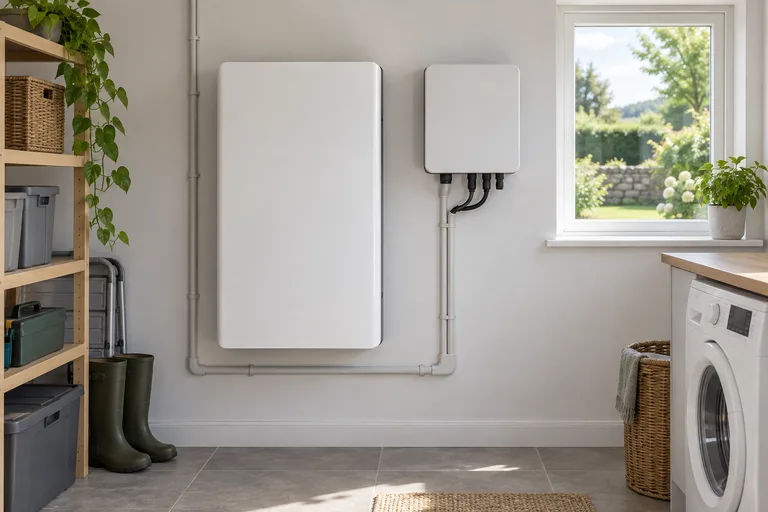
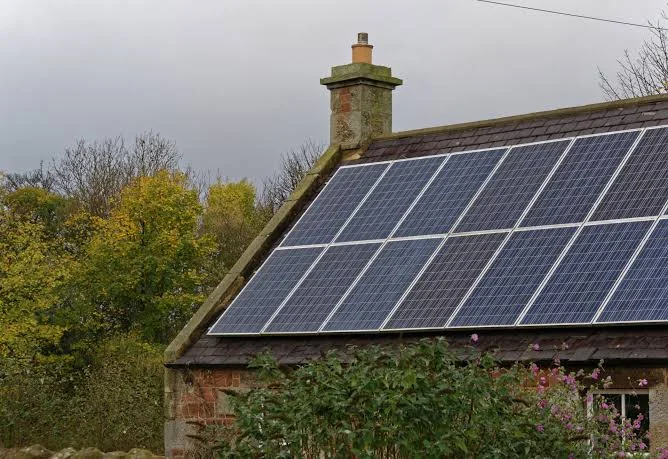
A home battery used to be something you paid for entirely yourself. SEAI now offers a flat grant towards it. The grant is real money, but it is small next to the price of a battery, so the sums matter. Here is what SEAI says, and what it does to your payback.
What the grant is, and when it was announced
SEAI states the grant is “a flat rate of €600 for systems of 5kWh or larger”. It was announced on 29 September 2026 in the Government’s package of enhanced grants, and the Budget 2027 press release from the Department of Climate, Energy and the Environment (6 October 2026) says a new home battery energy storage grant is available.
SEAI’s announcement estimates a household saving of €137 a year from a battery, with a footnote saying a battery fitted alongside a 4 kWp solar PV system can save up to €878 a year. SEAI does not spell out how the €137 is calculated, so treat both as estimates, not promises: your own saving depends on how much solar you export, your tariff and when you use electricity.
Who can apply
- Homeowners, including private landlords, owner management companies and approved housing bodies.
- The home must have an MPRN (electricity meter reference number).
- The property must have been built and occupied before 2025.
- A home with previous battery funding at the same MPRN is not eligible.
Do you need solar panels first?
No. SEAI says that if you already have solar PV, you don’t amend the old application. You submit a new battery application through the portal. If you are fitting panels and a battery at the same time, you can apply for both in one application. For the panel grant itself, see our guide to the SEAI solar PV grant.
How to apply, step by step
- Get quotes from SEAI-registered solar PV companies and a written contract.
- Apply online through the SEAI portal and wait for your Letter of Offer before any work starts. Check that the company named in the offer is the one doing the job.
- Your installer must apply to ESB Networks before installing. SEAI says this usually takes at least 4 weeks (20 working days), so build that into your timeline.
- Complete the works within 8 months and submit the Declaration of Works. A Registered Electrical Contractor must sign off the installation.
- Arrange a post-works BER with a registered SEAI BER assessor. SEAI says this is required for homes with solar PV and must be published before payment.
- SEAI pays into your bank account, usually within 4 to 6 weeks.
What it does to your payback: a worked example
The grant is €600. Batteries typically cost far more; in our solar battery guide we use an indicative range of €3,000 to €6,000. Take a battery quoted at €4,000 (an illustrative price, not a quote).
- Cost after grant: €4,000 − €600 = €3,400
- At SEAI’s estimated saving of €137 a year: €3,400 ÷ €137 ≈ 24.8 years
- Without the grant: €4,000 ÷ €137 ≈ 29.2 years
So the grant shortens payback by roughly four years in this example, but a saving of €137 a year still means a long wait. A battery makes the most sense if you use a lot of electricity in the evening, have a low export rate, are on a cheap night or smart tariff, or value backup power. Use your own bills and quotes, not averages.
Related change: selling your own electricity
The Budget 2027 press release also says the income tax disregard for households selling micro-generated electricity back to the grid rises from €400 to €600. If you export surplus solar, see how selling electricity back to the grid works. If a different amount appears on other pages, go by the gov.ie figure and check Revenue for your own case.
Before you sign
Ask for quotes with and without the battery, confirm the installer is SEAI-registered, and ask who handles the ESB Networks application and the post-works BER. Ask the installer to confirm in writing that the battery meets the grant requirements. If you are unsure how the process works overall, read how to apply for an SEAI grant. This article is general information, not personal financial advice; check seai.ie for the latest terms before you apply.