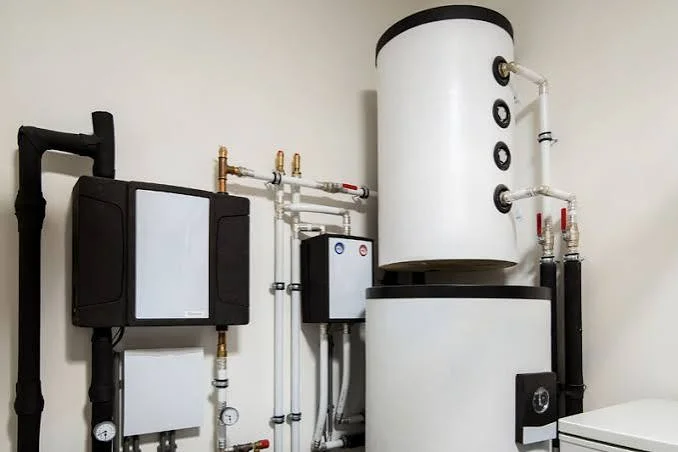
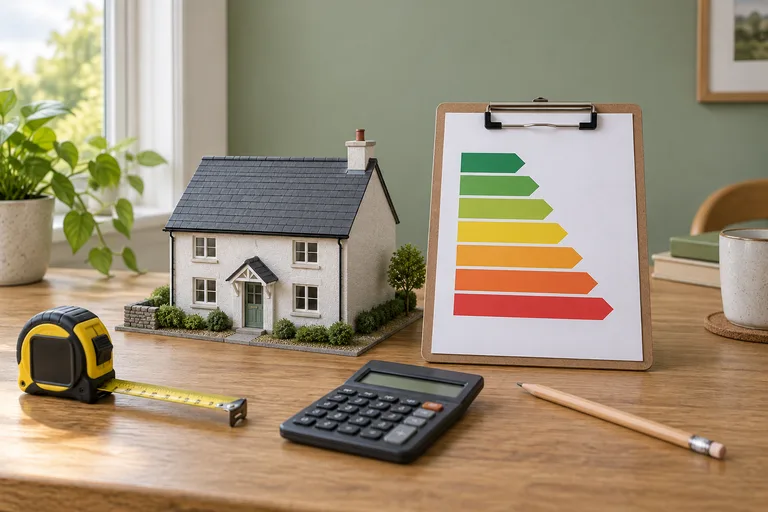
When a boiler is near the end of its life, the real question is not “are heat pumps good?” but “is a heat pump the right replacement for this house, at these prices?” This guide compares a heat pump with a gas or oil boiler on upfront cost, running cost and home readiness — and gives you a formula to answer the running-cost question with your own bills instead of someone else’s averages.
Upfront cost after the grant
| Gas or oil boiler replacement | Air-to-water heat pump | |
|---|---|---|
| Typical installed price | Much lower | Usually quoted around €10,000–€16,000 |
| SEAI grant | None | Up to €12,500 for a house (bundle) |
| Other work that may be needed | Usually none | Insulation, larger radiators, hot water cylinder |
Price ranges are indicative, not quotes. The grant is a bundle: up to €6,500 for the heat pump, up to €2,000 for a central heating upgrade and up to €4,000 renewable heat bonus when replacing oil, gas, solid fuel or electric storage heating. Details are in the heat pump grant guide and the price breakdown in heat pump cost in Ireland.

Running cost: compare the price of one unit of heat
Every heating system turns energy you buy into heat. The fair comparison is cost per kWh of heat delivered:
- Boiler: fuel price per kWh ÷ boiler efficiency
- Heat pump: electricity price per kWh ÷ seasonal efficiency (SCOP)
Then multiply by how much heat your home needs in a year.
A worked example
Hypothetical figures to show the method — replace every one with your own:
| Assumption | Value |
|---|---|
| Heat the home needs per year | 12,000 kWh |
| Gas price | 12c per kWh, boiler efficiency 90% |
| Kerosene price | €1.00 per litre ≈ 10c per kWh, boiler efficiency 85% |
| Electricity price | 30c per kWh, heat pump SCOP 3.5 |
| System | Cost per kWh of heat | Annual heating cost |
|---|---|---|
| Gas boiler | 12c ÷ 0.90 = 13.3c | 12,000 × €0.133 ≈ €1,600 |
| Oil boiler | 10c ÷ 0.85 = 11.8c | 12,000 × €0.118 ≈ €1,410 |
| Heat pump | 30c ÷ 3.5 = 8.6c | 12,000 × €0.086 ≈ €1,030 |
Now change one assumption: in a poorly insulated home with old, small radiators, the heat pump might only achieve a SCOP of 2.5. Its cost per unit of heat becomes 30c ÷ 2.5 = 12c — already slightly dearer than oil in this example — and a leaky home needs more heat in total. That is the whole case for insulating first.
The break-even rule
A heat pump is cheaper per unit of heat when:
electricity price ÷ SCOP < fuel price ÷ boiler efficiency
With gas at 12c and a 90% boiler (13.3c per unit of heat), a heat pump with a SCOP of 3 breaks even at an electricity price of about 40c per kWh; with a SCOP of 3.5, at about 47c. A cheaper night or smart tariff for some of the heat pump’s running hours lowers its cost further — see night-rate electricity.
Two costs people forget
- Standing charges: if a heat pump lets you disconnect from gas entirely, you also stop paying the gas standing charge. Keep it in the comparison — see standing charges explained.
- Hot water: the heat pump usually heats the cylinder too, so include hot water in the heat demand for both options.
Want to check real performance after installation? Our 14-day heat pump running-cost diary shows how to measure it.
Is your home ready?
A heat pump runs at lower water temperatures than a boiler and needs a home that holds heat. Signs you are ready:
- Attic and walls already insulated, and few draughts
- A recent BER showing a heat loss indicator at or below 2.3 W/K/m² (or a technical assessment confirming it)
- Radiators that can be upsized, or underfloor heating
- Space for an outdoor unit and a hot water cylinder
If several of these are missing, start with the insulation guide — those measures are grant-aided too, and they lower the size and cost of the heat pump you’ll eventually need.
Comfort, carbon and the long term
- Comfort: heat pumps give steady, lower-temperature heat; boilers heat quickly in bursts. Households used to “boost” heating often need to adjust to longer running hours at lower temperatures.
- Carbon: a heat pump runs on electricity, which is getting cleaner, and pairs well with solar panels. Gas and oil are fossil fuels.
- Rating: a heat pump in an insulated home usually improves the BER, which matters if you sell or rent.
Which should you choose?
| Your situation | Usually the better fit |
|---|---|
| Boiler has failed, home not yet insulated, tight budget | Replace the boiler now; plan insulation, then a heat pump |
| Home insulated, staying long term | Heat pump |
| Oil heating in a rural, well-insulated home | Heat pump — often the strongest case |
| Moving within a couple of years | Probably a boiler replacement |
| Want lowest carbon and pair with solar | Heat pump |
When it’s not worth it — yet
Be honest with yourself if the home is cold and draughty, the budget only covers the heat pump and not the insulation it needs, or you’ll move soon. In those cases, insulate now, keep the boiler running, and revisit the heat pump once the home is ready.