If your attic has little insulation, it is worth investigating early. Its priority depends on the existing building, moisture condition and other sources of heat loss. Here’s what it costs in Ireland, the SEAI grant by house type, and how to claim it.
Attic insulation grant by house type (2026)
| House type | Standard grant | First-time buyer / qualifying welfare |
|---|---|---|
| Apartment | €1,100 | €1,400 |
| Mid-terrace | €1,400 | €1,800 |
| Semi-detached / end-terrace | €1,500 | €1,900 |
| Detached | €2,000 | €2,500 |
Eligibility
- Home built and occupied before 2011
- Valid MPRN on your electricity bill
- SEAI-registered contractor
- Applied and approved before work starts
What it actually costs
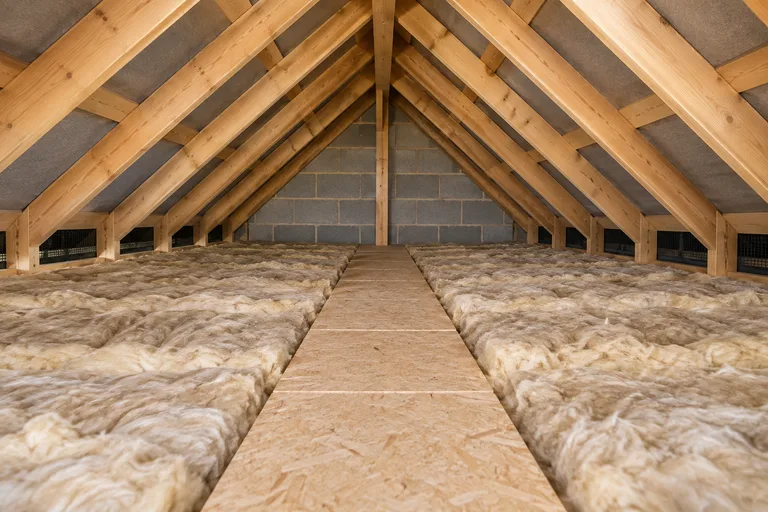
Attic insulation is one of the cheaper measures, and the grant often covers a large share of the job — sometimes most of it for a straightforward roll-out insulation in a standard attic. Costs rise if your attic needs boarding, access work, or spray/rigid insulation for a converted or awkward space. As always, get a written quote from a registered contractor.
When it can be a useful early upgrade
- Heat rises — an uninsulated attic is a chimney for your heating budget.
- It can reduce heat loss and improve your BER, with value depending on what is already installed.
- It’s a prerequisite mindset for bigger upgrades: insulate before you install a heat pump, so the system can be smaller and cheaper to run.
Next, look at wall insulation, the other big heat-loss area, and the full insulation guide for the right order to do things.
Compare the scope before comparing the price
An accessible, empty attic and a roof space used for storage are not the same job. Ask each contractor to list the area treated, existing insulation condition, proposed materials, treatment of the hatch, protection of services and arrangements for access. Ask whether removal, repairs, boarding and the post-works assessment are included.
Do not assume a quote for attic-floor insulation includes insulation of a converted room in the roof. The thermal boundary is different. Ask the assessor or contractor to identify where the insulated envelope will run and why that approach suits the building.
A budget example with exclusions
Imagine a fictional quote of €2,600 for the insulation work plus €400 for separately required access work. With an assumed confirmed grant of €1,500, the household would budget €1,500 net, not €1,100. The numbers are an arithmetic example, not evidence of a typical price or of which extras qualify for grant support.
Ask who receives the grant and what you must pay before reimbursement. If an advertised price is already “after grant”, subtracting the grant again understates the amount you will pay.
Questions for the site visit
- Is there evidence of water ingress or damp that needs attention before insulation?
- How will roof ventilation and necessary air paths remain effective?
- How will cables, recessed lights, water tanks and pipes be handled safely?
- How can future access avoid compressing or damaging the insulation?
- What photographs, product records and completion documents will you receive?
These are questions for a competent contractor, not a DIY installation specification. A home that already has substantial insulation may have a different priority from one with a bare attic. Take the quote checklist to your survey and compare the recommendations with the home’s assessment.